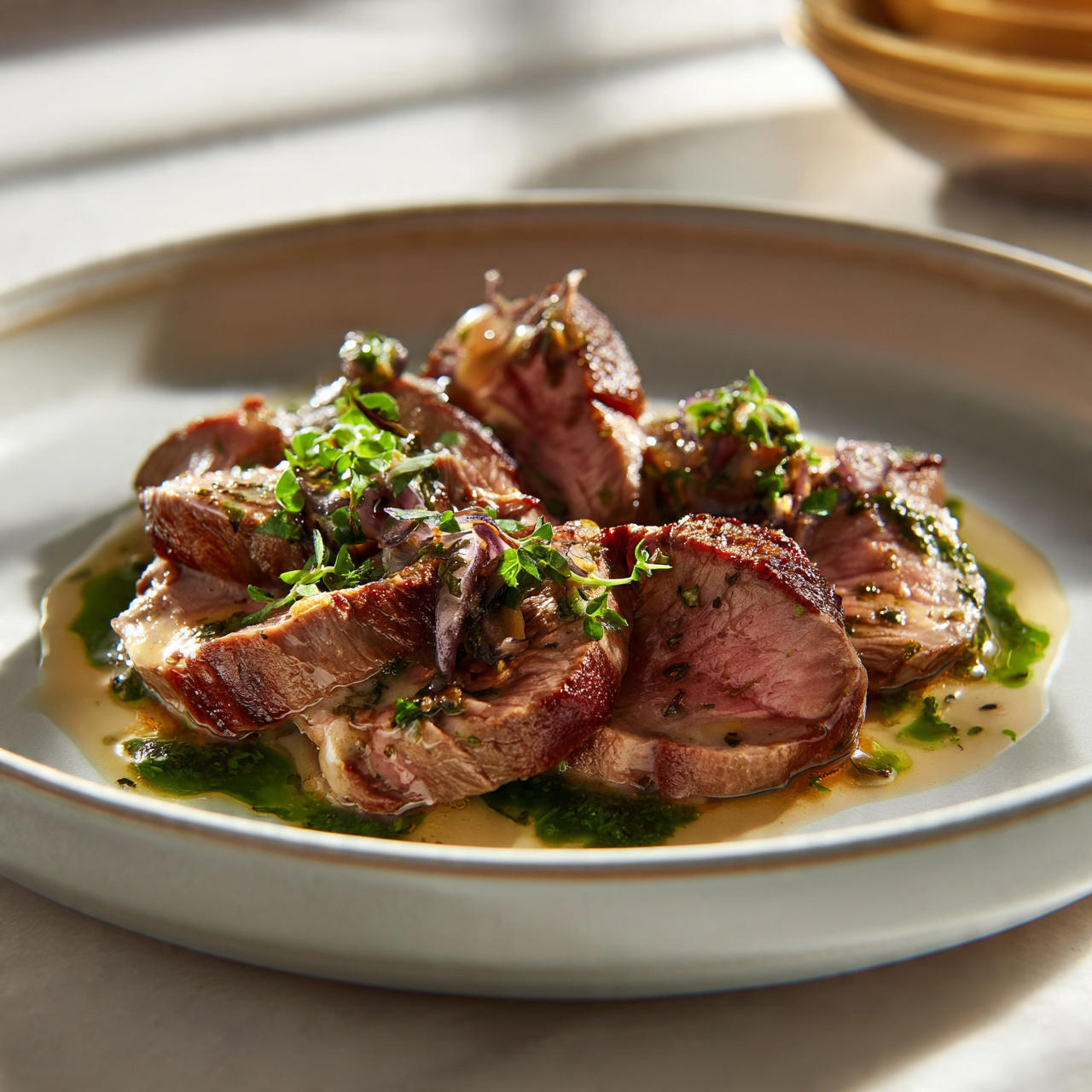
The Best Ever Juicy Beef Tenderloin Recipe (Oven or Cast Iron)
This juicy beef tenderloin recipe delivers a perfectly seared, melt-in-your-mouth roast every time using simple oven or cast iron techniques any home cook can master.

The Only Beef Tenderloin Recipe You Will Ever Need
There is a reason beef tenderloin earns a standing spot at every holiday table and celebratory dinner. It is the most tender cut on the entire animal, and when it is cooked right, each slice is buttery, deeply savory, and genuinely impressive. The good news? You do not need a culinary degree or a professional kitchen to pull this off. With a hot pan, a good thermometer, and a little patience, you can cook the best ever beef tenderloin right at home.
This recipe works beautifully whether you are making an easy beef tenderloin dinner on a weeknight or going all out for a holiday feast. We are talking a golden, herb-crusted exterior with a rosy, juicy center that melts on your tongue. It is the kind of meal that makes everyone at the table go quiet for a moment.
Why Cast Iron Is Your Best Friend for This Recipe
If there is one piece of equipment that truly transforms a home-cooked beef tenderloin, it is a cast iron skillet. It holds heat better than almost any other pan, which means when your tenderloin hits the surface, you get an immediate, powerful sear. That sear is not just about looks. It builds a crust that locks in flavor and gives you that gorgeous contrast between the crispy exterior and the tender, pink interior.
Beyond the skillet, a reliable instant-read meat thermometer is non-negotiable here. Guessing on a cut this good is simply too risky.
Having the right tools on hand truly makes easy beef tenderloin recipes oven-friendly and stress-free:
The Secret to a Juicy Beef Tenderloin Every Single Time
Most home cooks overcomplicate this cut or, worse, overcook it. Here are the three things that separate a truly juicy beef tenderloin recipe from a disappointing one:
- Bring the meat to room temperature. Cold meat going into a hot pan cooks unevenly. Pull it from the fridge at least 45 minutes before cooking.
- Sear it hard and fast. High heat, a dry surface, and no touching. You want a real crust, not gray steamed meat.
- Rest it religiously. Ten to fifteen minutes under a foil tent lets the juices redistribute so every slice stays moist.
Chef's Tip: Pat the tenderloin completely dry before seasoning. Surface moisture is the enemy of a great sear. A dry surface browns; a wet surface steams. This one step is the difference between a pale, sad roast and a beautifully caramelized one.
The herb butter here is another game-changer. As it melts over the hot meat during the oven finish, it bastes the roast from the outside in, adding richness and a fragrant, garlicky depth that simple salt and pepper alone cannot achieve.
Choosing and Prepping Your Tenderloin
When shopping, look for a center-cut beef tenderloin (also called a Chateaubriand), which gives you an even thickness from end to end. This is what makes how to cook beef tenderloin so much easier: uniform thickness means uniform cooking.
If your butcher has not already done so, ask them to trim the silver skin and tie the roast with kitchen twine. The twine holds the tenderloin in an even cylindrical shape so it cooks uniformly and looks stunning on a cutting board.
A simple Dijon mustard rub underneath the herb seasoning is optional, but it adds a quiet, tangy complexity to the crust that is absolutely worth it.
Ready to make the most impressive dinner of your week? Here is the full step-by-step recipe:
The Best Ever Juicy Beef Tenderloin Recipe (Oven or Cast Iron)
This juicy beef tenderloin recipe delivers a perfectly seared, melt-in-your-mouth roast every time using simple oven or cast iron techniques any home cook can master.
Ingredients
- 3 lb beef tenderloin roast, trimmed of silver skin and tied with kitchen twine
- 2 tbsp olive oil, extra virgin
- 3 tbsp unsalted butter, softened
- 4 garlic cloves, minced
- 2 tbsp fresh rosemary, finely chopped
- 1 tbsp fresh thyme, finely chopped
- 2 tsp kosher salt, or more to taste
- 1 tsp freshly cracked black pepper
- 1 tbsp Dijon mustard, optional, for crust depth
Instruction
Remove the beef tenderloin from the refrigerator 45 to 60 minutes before cooking to bring it to room temperature. This ensures even cooking throughout.
Preheat your oven to 425 degrees F (220 degrees C). If using a cast iron skillet that fits in your oven, you can use it for both searing and roasting.
In a small bowl, combine the softened butter, minced garlic, rosemary, and thyme. Mix well into a compound herb butter. Set aside.
Pat the tenderloin completely dry with paper towels. Season generously all over with kosher salt and freshly cracked black pepper. If using Dijon mustard, rub a thin layer over the entire roast before seasoning.
Heat a large cast iron skillet or oven-safe heavy skillet over high heat. Add the olive oil and heat until it just begins to smoke.
Sear the tenderloin on all sides, including the ends, for about 2 to 3 minutes per side until a deep golden brown crust forms. Do not move the meat while searing each side.
Remove the skillet from heat. Spread the herb butter generously over the entire surface of the tenderloin.
Transfer the skillet directly to the preheated oven. Roast for 20 to 25 minutes, or until an instant-read thermometer inserted into the thickest part reads 125 degrees F (52 degrees C) for medium-rare, or 135 degrees F (57 degrees C) for medium.
Remove the tenderloin from the oven and tent loosely with aluminum foil. Let it rest for at least 10 to 15 minutes before slicing. The internal temperature will rise another 5 to 10 degrees during resting.
Remove the kitchen twine, slice into 1-inch medallions, and serve immediately with any pan drippings spooned over the top.
Equipment
- Large cast iron skillet (12-inch recommended)
- Instant-read meat thermometer
- Kitchen twine
- Aluminum foil
- Small mixing bowl
- Tongs
- Sharp carving knife
Notes
Serving, Storing, and Making It Your Own
Serve slices fanned out on a warm platter with pan drippings spooned over the top. A simple side of roasted asparagus, creamy mashed potatoes, or a crisp green salad is all you need to round out the meal.
For make-ahead ease, season and tie the roast up to 24 hours in advance and refrigerate it uncovered. The dry surface that develops actually improves your sear the next day.
Leftovers reheat gently in a low oven with a splash of broth and a tight foil cover. You can also slice cold leftovers thin for an incredible steak sandwich the next day.