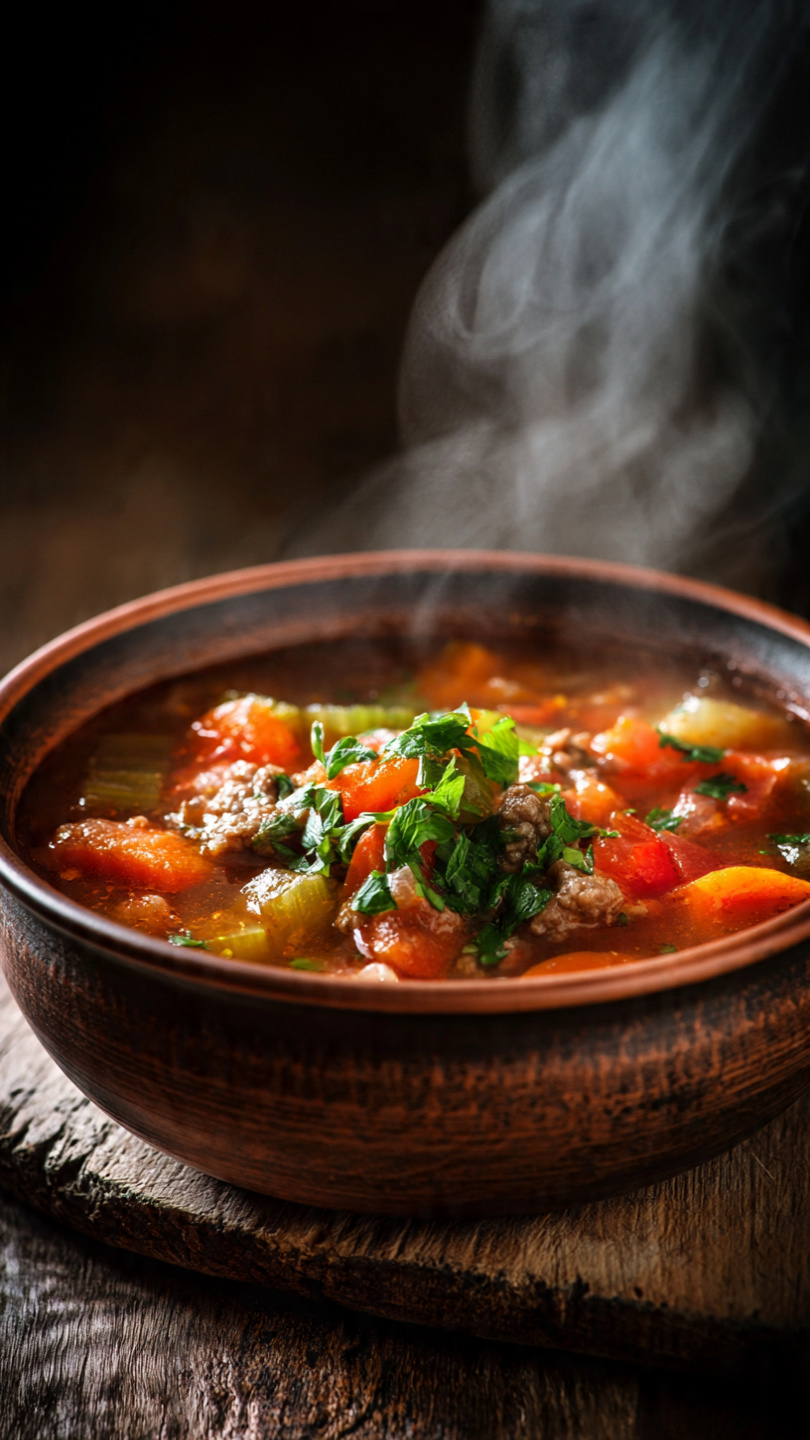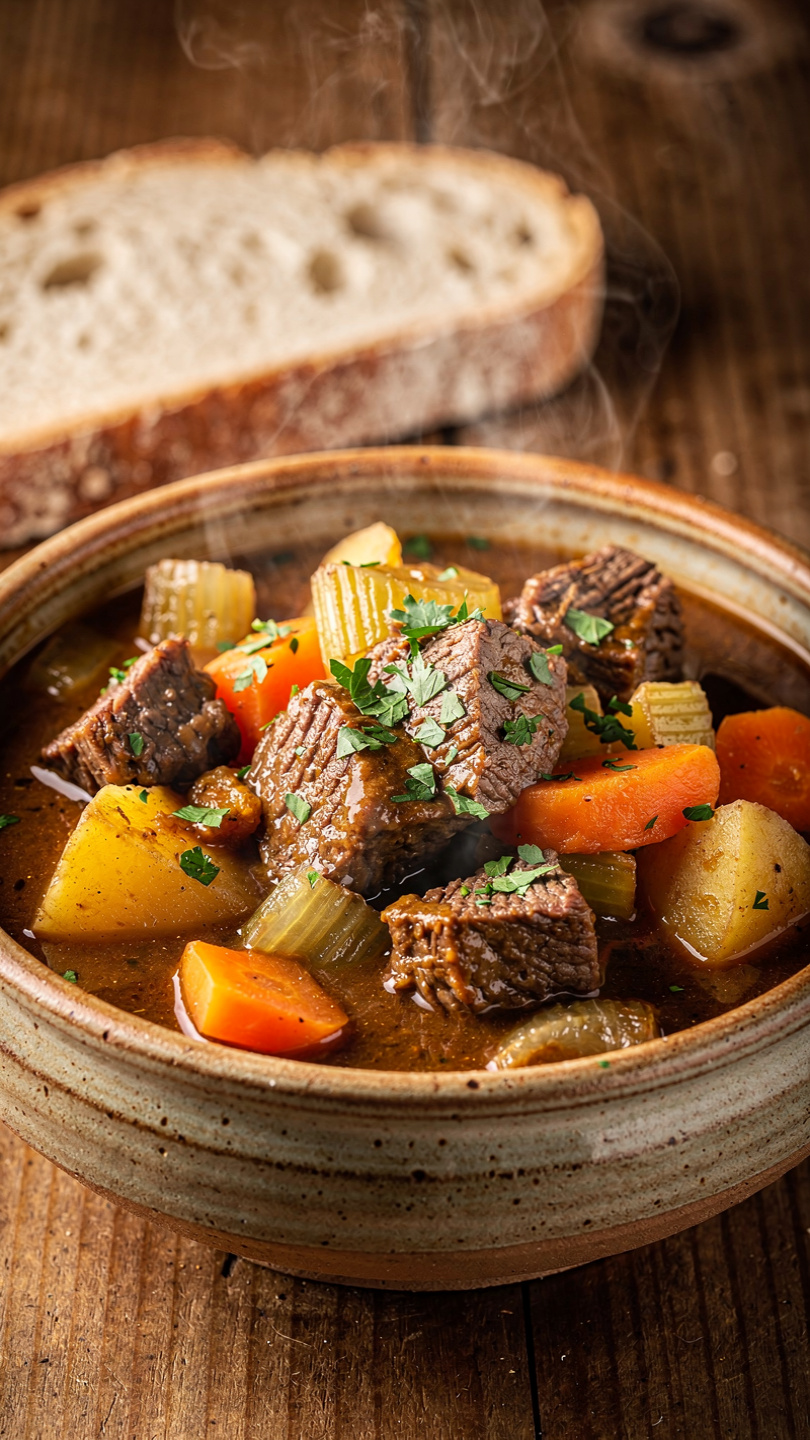
Old Fashioned Beef Stew Recipe
This classic beef stew recipe is the ultimate comfort food, packed with tender chunks of beef, hearty vegetables, and a rich, savory broth that tastes like it simmered all day.

The Best Beef Stew You Will Ever Make
There is something undeniably soul-warming about a pot of old fashioned beef stew bubbling away on the stove. This is the classic beef stew recipe your grandmother probably made, the kind that fills the entire house with an aroma so good it draws everyone into the kitchen before dinner is even on the table. Tender, melt-in-your-mouth chunks of beef, hearty potatoes and carrots, and a deeply savory broth that clings to every bite. This is pure, unapologetic comfort food.
Whether you are searching for the best beef stew recipe for a cold Sunday afternoon or you want to finally nail how to make old fashioned beef stew the way it is supposed to taste, you have landed in the right place. This recipe is built on technique, not shortcuts, and every step has a purpose.
Why This Old Fashioned Beef Stew Recipe Works
A lot of beef stew recipes end up with tough meat and a thin, watery broth. This one does not, and here is why.
- Searing the beef first creates a deeply browned, caramelized crust that adds enormous flavor to the entire stew through a process called the Maillard reaction. Do not skip this step.
- Tomato paste and red wine give the broth a rich, complex backbone that plain broth alone cannot achieve.
- Low and slow simmering is what transforms a tough chuck roast into fork-tender, pull-apart beef. Patience is the secret ingredient.
- Adding vegetables in stages means your potatoes and carrots are perfectly cooked, never mushy.
Chef's Tip: The single most important thing you can do for this recipe is dry your beef thoroughly before searing. Moisture is the enemy of a good sear. Pat each piece down with paper towels until it feels almost tacky to the touch.
Choosing the Right Beef
For any classic beef stew recipe, beef chuck roast is the non-negotiable choice. This cut comes from the shoulder of the cow and is loaded with connective tissue and fat that slowly breaks down during braising, leaving you with meat that is rich, juicy, and absolutely tender.
Avoid pre-cut "stew meat" from the store if you can. It is often a mix of different cuts that cook unevenly. Buy a whole chuck roast and cut it yourself into generous 1.5-inch cubes. Bigger pieces hold up better during the long cook and give you satisfying, hearty bites.
The right heavy pot also makes a real difference when building flavor. A well-seasoned Dutch oven distributes heat evenly and holds it consistently, which means a better sear and a more steady, gentle simmer throughout the cook.
Tips for the Richest, Most Flavorful Broth
The broth is the heart of any old fashioned beef stew recipe, and a few small moves take it from good to unforgettable.
Deglaze with wine. After sauteing the aromatics, pour in the red wine and use your wooden spoon to scrape up every browned bit from the bottom of the pot. Those dark bits, called fond, are pure concentrated flavor.
Use low-sodium broth. You are reducing and concentrating the liquid as the stew cooks, so starting with full-sodium broth can make the finished dish too salty. Low-sodium gives you control.
Let it rest. This old fashioned beef stew genuinely tastes better the next day. If you have the time, make it the evening before you plan to serve it. The flavors meld and deepen overnight in a way that is hard to replicate any other way.
Make-Ahead Note: Cool the stew completely before refrigerating. The fat will solidify on the surface overnight and can be skimmed off easily before reheating for a cleaner, lighter broth.
Ready to make the most satisfying bowl of the season? Here is the full step-by-step recipe:
Old Fashioned Beef Stew Recipe
This classic beef stew recipe is the ultimate comfort food, packed with tender chunks of beef, hearty vegetables, and a rich, savory broth that tastes like it simmered all day.
Ingredients
- 2 lb beef chuck roast, cut into 1.5-inch cubes
- 3 tbsp all-purpose flour, for dredging
- 1 1/2 tsp kosher salt, divided
- 3/4 tsp black pepper, freshly ground
- 3 tbsp vegetable oil, divided
- 1 yellow onion, roughly chopped
- 4 garlic cloves, minced
- 2 tbsp tomato paste
- 1/2 cups dry red wine, such as Cabernet Sauvignon or Merlot
- 3 cups beef broth, low sodium
- 1 tbsp Worcestershire sauce
- 3 fresh thyme sprigs, or 0.5 tsp dried thyme
- 2 bay leaves
- 1 lb Yukon Gold potatoes, cut into 1-inch chunks
- 3 carrots, peeled and sliced into thick coins
- 2 celery stalks, chopped
- 3/4 cups frozen peas, added at the end
- 2 tbsp fresh parsley, chopped, for garnish
Instruction
Pat the beef cubes completely dry with paper towels. In a large bowl, toss them with the flour, 1 teaspoon of salt, and black pepper until evenly coated.
Heat 2 tablespoons of oil in a large Dutch oven or heavy-bottomed pot over medium-high heat. Working in batches, sear the beef for 2 to 3 minutes per side until deeply browned on all sides. Do not crowd the pan. Transfer the seared beef to a plate and set aside.
Reduce the heat to medium and add the remaining 1 tablespoon of oil. Add the onion and celery and cook, stirring occasionally, for about 4 minutes until softened. Add the garlic and tomato paste and cook for 1 more minute, stirring constantly.
Pour in the red wine and scrape up any browned bits stuck to the bottom of the pot. Let the wine simmer for 2 minutes.
Return the seared beef to the pot. Add the beef broth, Worcestershire sauce, thyme sprigs, bay leaves, and remaining 0.5 teaspoon of salt. Stir to combine and bring the mixture to a boil.
Reduce the heat to low, cover, and simmer for 45 minutes.
After 45 minutes, add the potatoes and carrots. Stir everything together, cover again, and continue to simmer for another 40 to 50 minutes, or until the beef is fork-tender and the vegetables are cooked through.
Discard the bay leaves and thyme sprigs. Stir in the frozen peas and cook for 3 to 5 minutes until heated through. Taste and adjust salt and pepper as needed.
Ladle the stew into bowls and garnish with fresh chopped parsley. Serve hot with crusty bread.
Equipment
- Large Dutch oven or heavy-bottomed pot (at least 6-quart)
- Wooden spoon or silicone spatula
- Chef's knife and cutting board
- Paper towels
- Large mixing bowl
- Ladle
Notes
Serving and Storing Your Beef Stew
This stew is a complete meal on its own, but a few simple sides turn it into something special.
- Crusty sourdough or a warm baguette for soaking up every last drop of broth
- Buttered egg noodles for a heartier, more filling bowl
- A simple green salad to balance the richness
Leftovers keep beautifully in the refrigerator for up to 4 days and freeze well for up to 3 months. Reheat gently on the stovetop over low heat with a splash of broth to bring it back to the perfect consistency.
However you serve it, this is the kind of meal that brings people together and makes them ask for seconds. It is timeless for a reason.