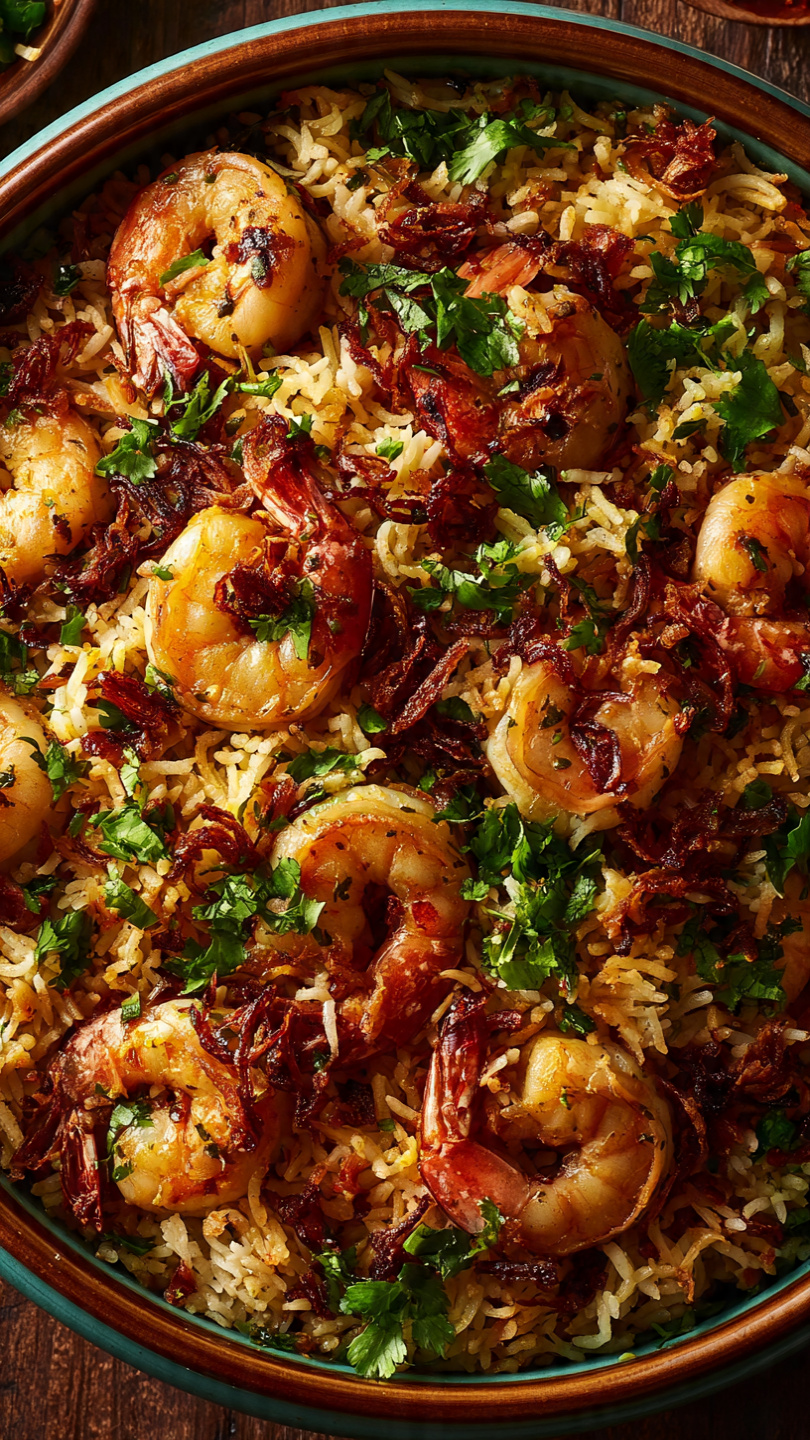
Shrimp Biryani (Easy Seafood Biryani Recipe)
This easy Shrimp Biryani is a fragrant, restaurant-quality seafood biryani loaded with juicy prawns, aromatic basmati rice, and warming Indian spices, all ready in under an hour.

The Fragrant, Show-Stopping Shrimp Biryani You Have Been Waiting For
If there is one dish that can fill an entire home with the most intoxicating aroma imaginable, it is a proper Shrimp Biryani. Golden saffron rice, plump juicy prawns coated in a deeply spiced masala, and the gentle perfume of whole cardamom and cloves mingling together as it steams, this easy shrimp biryani is the kind of meal that makes people stop whatever they are doing and wander into the kitchen. Whether you know it as a seafood biryani recipe, a King Prawn Biryani, or simply the best thing you have eaten all week, this recipe delivers full, authentic flavor without requiring an entire day in the kitchen.
This is not Indian shrimp fried rice. Biryani is a layered, slow-steamed dish with a history and a depth of flavor that is entirely its own. But easy shrimp biryani? That is absolutely achievable on a weeknight, and we are going to prove it.
Why This Recipe Works
The secret to an exceptional seafood biryani comes down to three things: marinating the shrimp, parboiling the rice correctly, and nailing the dum (the sealed steaming step that brings everything together).
Shrimp is one of the fastest-cooking proteins around, which is actually an advantage here. A quick 15-minute yogurt and spice marinade tenderizes the prawns and locks in flavor. Parboiling the rice to only about 70 percent doneness means it finishes perfectly during the dum without turning mushy. And that final low-and-slow steam is what transforms a pot of layered ingredients into something that tastes like it came from a proper Indian kitchen.
Chef's Tip: The single biggest mistake home cooks make with biryani is fully cooking the rice before layering it. Keep it slightly underdone. It will finish cooking in the steam and absorb all those gorgeous flavors in the pot.
The Tools and Ingredients That Make the Difference
For a recipe like this one, having the right equipment genuinely matters. A heavy-bottomed Dutch oven or deep pot with a tight-fitting lid is non-negotiable for the dum step. Good quality saffron and a fresh biryani masala or garam masala blend will also elevate this dish from good to extraordinary.
Key Ingredients and Smart Swaps
Here is a closer look at what makes this easy shrimp biryani recipe shine, plus some practical substitutions:
- Basmati rice: Long-grain, aged basmati is the only choice here. Its floral fragrance and ability to stay separate after cooking are what define a proper biryani. Do not substitute jasmine or medium-grain rice.
- Shrimp or prawns: Large shrimp (21-25 count) or king prawns work beautifully. Fresh or thawed-from-frozen both give excellent results. Pat them very dry before marinating.
- Saffron: Even a small pinch bloomed in warm milk gives the rice those gorgeous golden streaks and a subtle floral depth. If saffron is unavailable, a tiny pinch of turmeric stirred into the milk will mimic the color (though not the full flavor).
- Kashmiri chili powder: This gives a beautiful red color with moderate heat. Sweet paprika is the best substitute if you cannot find it.
- Ghee: Using ghee instead of neutral oil adds an unmistakably rich, buttery depth that pairs perfectly with the prawns. It is worth using if you have it.
- Whole spices: The cardamom pods, cloves, cinnamon, and bay leaves are added to the parboiling water and infuse the rice with a delicate warmth. Do not skip them.
How to Build Perfect Layers
The layering step is where biryani goes from a curry with rice to something truly special. Here is the order that works every time:
- Shrimp masala base across the bottom of the pot
- Fresh herbs (cilantro and mint) scattered over the masala
- Half the fried crispy onions for sweetness and crunch
- Parboiled rice spread evenly on top
- Saffron milk drizzled over the rice
- Remaining herbs and fried onions on top
When you lift the lid at the end and gently stir through the layers, you get streaks of golden saffron rice, pockets of green herbs, and that incredible shrimp masala woven throughout. It is genuinely beautiful.
A Note on the Dum
Dum is the traditional technique of sealing a pot and cooking the biryani in its own steam over low heat. It is what gives biryani its signature texture and depth. For a foolproof seal, place a sheet of aluminum foil between the pot and the lid before clamping it down. This traps every bit of steam inside and ensures even cooking throughout.
If you prefer a prawn biryani recipe Instant Pot method, the FAQ below covers exactly how to adapt this recipe for a pressure cooker with great results.
Ready to bring this gorgeous dish to your table? Here is the complete step-by-step recipe:
Shrimp Biryani (Easy Seafood Biryani Recipe)
This easy Shrimp Biryani is a fragrant, restaurant-quality seafood biryani loaded with juicy prawns, aromatic basmati rice, and warming Indian spices, all ready in under an hour.
Ingredients
- 2 cups basmati rice, rinsed and soaked for 20 minutes
- 1 1/4 lb large shrimp, peeled, deveined, tails on or off
- 1/2 cup plain whole-milk yogurt, for the marinade
- 3 tbsp neutral oil or ghee, ghee gives the most authentic flavor
- 2 yellow onion, thinly sliced
- 2 Roma tomatoes, finely chopped
- 5 garlic cloves, minced
- 1 tbsp fresh ginger, freshly grated
- 2 tsp biryani masala or garam masala, store-bought or homemade
- 3/4 tsp ground turmeric
- 1 tsp Kashmiri red chili powder, or use sweet paprika for less heat
- 1 tsp ground cumin
- 1 tsp ground coriander
- 4 whole green cardamom pods, lightly crushed
- 4 whole cloves
- 2 bay leaves
- 1 cinnamon stick, about 2 inches long
- 1/4 tsp saffron threads, steeped in 3 tbsp warm milk for 10 minutes
- 3 tbsp warm whole milk, for blooming the saffron
- 1/2 cup fresh cilantro, roughly chopped, for layering and garnish
- 1/4 cup fresh mint leaves, roughly torn, for layering and garnish
- 1/2 cup fried crispy onions, store-bought or homemade, divided
- 2 tsp kosher salt, divided, plus more to taste
- 4 cups water, for parboiling the rice
- 1 tbsp lemon juice, freshly squeezed
Instruction
Bloom the saffron: Stir the saffron threads into 3 tablespoons of warm milk and set aside to steep for at least 10 minutes.
Marinate the shrimp: In a large bowl, combine the shrimp with the yogurt, half the turmeric (0.375 tsp), half the garam masala (1 tsp), Kashmiri chili powder, cumin, coriander, lemon juice, and 1 teaspoon of salt. Toss well to coat. Set aside to marinate for 15 to 20 minutes at room temperature while you prep the other components.
Parboil the rice: Bring 4 cups of well-salted water to a rolling boil in a large pot. Drain the soaked basmati rice and add it to the boiling water along with the bay leaves, cardamom pods, cloves, and cinnamon stick. Cook for 5 to 6 minutes until the rice is just 70 percent cooked (it should still have a firm, chalky center when you bite it). Drain immediately through a fine-mesh strainer and spread the rice out on a baking sheet to stop the cooking. Discard the whole spices if preferred.
Cook the onions: Heat the ghee or oil in a wide, heavy-bottomed pot or Dutch oven over medium-high heat. Add the sliced onions and cook, stirring often, for 12 to 15 minutes until they are deeply golden and caramelized. Remove half the onions and set them aside for layering.
Build the masala: To the remaining onions in the pot, add the garlic and ginger. Cook for 1 to 2 minutes until fragrant. Add the chopped tomatoes, remaining turmeric, and remaining garam masala. Cook for 4 to 5 minutes, stirring often, until the tomatoes break down and the oil begins to separate from the masala at the edges of the pot.
Cook the shrimp: Add the marinated shrimp (along with any marinade in the bowl) to the pot in a single layer. Cook for 2 to 3 minutes per side just until the shrimp are pink and opaque. Do not overcook at this stage as they will continue cooking during the dum (steam). Taste and adjust salt.
Layer the biryani: Spread the shrimp masala evenly across the bottom of the pot. Scatter half the fresh cilantro, half the fresh mint, and half the reserved fried onions over the shrimp layer. Spread all of the parboiled rice on top in an even layer. Drizzle the saffron milk evenly over the rice. Finish with the remaining cilantro, mint, and fried onions on top.
Dum (seal and steam): Cover the pot tightly with a lid. If your lid is not tight-fitting, place a piece of aluminum foil between the pot and lid to trap all the steam. Cook on medium heat for 5 minutes, then reduce to the lowest possible heat and cook for another 15 to 18 minutes. The steam will finish cooking the rice and meld all the flavors together.
Rest and serve: Remove the pot from heat and let it rest, still covered, for 5 minutes. Uncover, fluff gently with a fork, and serve hot with raita, sliced cucumber, or lemon wedges on the side.
Equipment
- Large heavy-bottomed pot or Dutch oven with a tight-fitting lid
- Large mixing bowl
- Fine-mesh strainer or colander
- Small bowl for blooming saffron
- Baking sheet
- Sharp knife and cutting board
Notes
Serving, Storing, and Variations
How to serve it: Shrimp Biryani is a complete meal on its own, but it shines alongside a cool cucumber raita, a simple kachumber salad of diced onion, tomato, and cucumber, and crispy papadums. Sliced lemon wedges at the table let everyone brighten their own plate.
Storing leftovers: Transfer cooled biryani to an airtight container and refrigerate for up to 2 days. Reheat gently in a covered pan with a splash of water, or microwave with a damp paper towel over the top to keep the rice from drying out. Avoid freezing as shrimp loses its texture significantly after thawing.
Variations to try:
- Coconut Shrimp Biryani: Stir 0.25 cup of coconut milk into the masala for a coastal South Indian twist.
- Extra spicy: Add 1 to 2 finely chopped green chilies (serrano or Thai) to the masala along with the garlic and ginger.
- Mixed Seafood Biryani: Replace half the shrimp with scallops or cubed firm white fish for a stunning mixed seafood biryani recipe.